
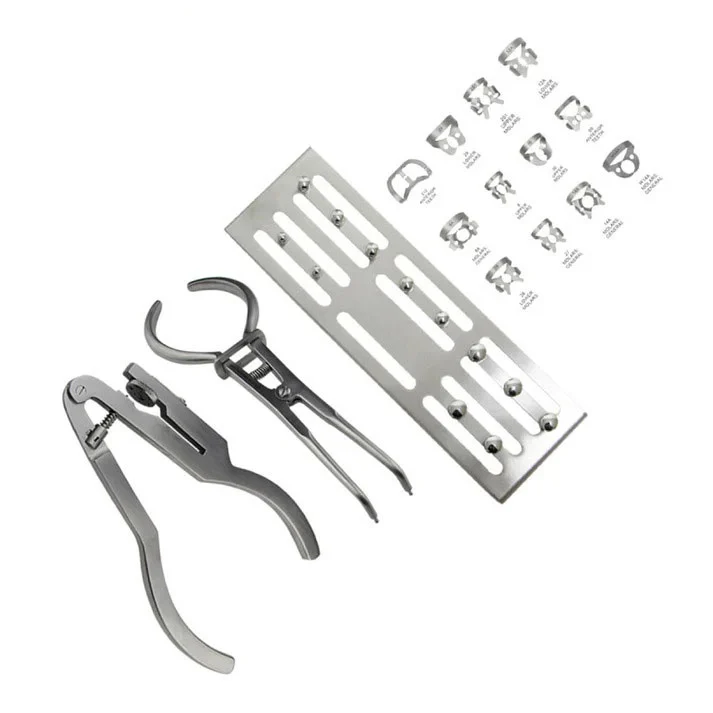
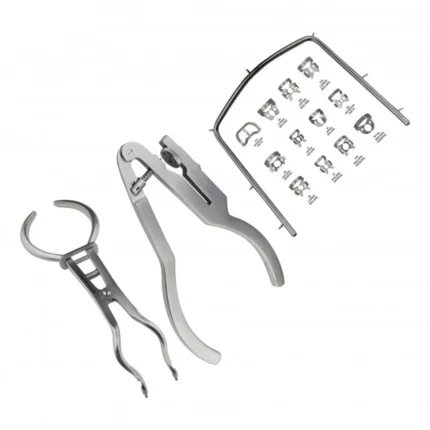
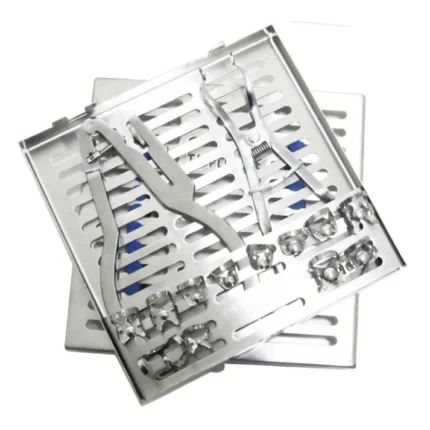

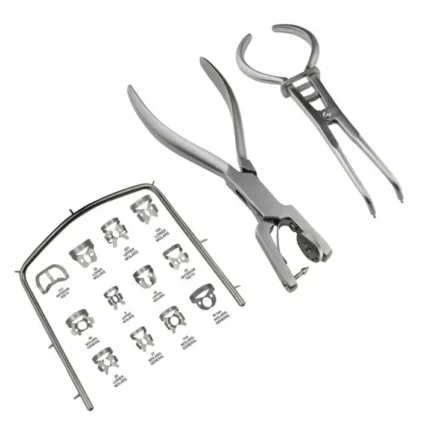
Basic Rubber Dam Kit 12 is a reusable dental rubber dam isolation set made from German stainless steel for endodontic isolation, restorative dentistry, adhesive procedures, crown preparation, operative field control, and dental moisture management. The set consists of rubber dam stock forceps 17 cm, rubber dam 12 clamps with holder, and Ivory rubber dam punch pliers, giving clinicians the core components required for clamp selection, dam perforation, clamp placement, and organized tray handling. The clamp forceps engage clamp holes for controlled placement around molars, premolars, anterior teeth, and partially erupted clinical crowns. The Ivory punch pliers create clean dam sheet perforations for single-tooth isolation, quadrant isolation, root canal treatment, composite bonding, fissure sealants, inlay preparation, onlay cementation, veneer procedures, and fixed prosthodontic work. General dentists, endodontists, restorative clinicians, prosthodontists, pediatric dentists, dental schools, hospital dental departments, veterinary dental units, distributors, and procurement offices use this kit in isolation, restorative, endodontic, operative, and teaching tray setups.
Clamp Forceps, Ivory Punch, and Cassette Mechanics
The Basic Rubber Dam Kit 12 is built around three working mechanisms used during rubber dam isolation. The stock forceps have slender beaks designed to engage the holes of a rubber dam clamp, allowing the clinician to open the clamp, guide it over the target crown, and release it with controlled seating pressure. The 17 cm length provides reach for posterior molars while keeping the hand away from the occlusal field. The Ivory punch pliers use a punch pin and rotating selection plate to perforate dam material before intraoral placement. Accurate perforation spacing helps the dam stretch over teeth without tearing during endodontic or restorative work. The 12 clamps are arranged in the holder so the operator can select an appropriate retainer by tooth group and crown contour. The cassette keeps clamps organized during cleaning, sterilization, chairside setup, and inventory checks. The working action depends on clamp expansion, punch-hole accuracy, cassette organization, and controlled forceps release rather than cutting, scaling, or tissue grasping.
Rubber Dam Isolation Workflow in Clinical Procedures
During endodontic treatment, the Basic Rubber Dam Kit 12 is used after diagnosis, anesthesia, and access planning to establish a dry and protected operating field before access cavity preparation, canal negotiation, irrigation, obturation, and temporary restoration. The Ivory punch is used first to create a tooth-specific opening in the dam sheet. The selected clamp is then held with the stock forceps and seated on the molar, premolar, or anterior abutment according to retention requirements. In restorative dentistry, the kit supports composite bonding, class II restorations, fissure sealants, adhesive cementation, veneer preparation, inlay placement, onlay seating, and crown margin review. The clamp stabilizes the dam while the sheet retracts soft tissue, improves visibility, and controls saliva during adhesive workflows. Pediatric dentists use the system for controlled isolation in smaller arches when clamp fit and dam hole position are planned carefully. Veterinary dental teams use the same principles during selected oral procedures where tooth isolation, field separation, and organized clamp handling are required.
Twelve Clamp Set and Component Selection
The 12 clamp set is selected to give clinics a broader retention range than single-clamp or limited isolation kits. Molar clamps are used when posterior retention is required during root canal treatment, class II restorations, crown preparation, and adhesive cementation. Premolar clamps are selected for smaller crown diameters and quadrant isolation where a molar retainer would overextend into soft tissue or interfere with the field. Anterior clamp selection supports cervical access, veneer procedures, class V restorations, and single-tooth isolation where labial and lingual adaptation are required. The stock forceps are selected whenever clamp opening, transfer, and seating must be controlled without hand contact near the working jaws. The Ivory punch is selected before placement to create perforations matched to tooth spacing, arch position, and dam tension. The holder organizes all clamps for tray setup, sterilization turnover, and supply auditing. This component combination supports endodontic, operative, pediatric, prosthodontic, hygiene-supported restorative, and teaching workflows where rubber dam isolation is repeated throughout the clinical day.
German Steel Sterilization and Procurement Records
German stainless steel construction gives the Basic Rubber Dam Kit 12 the rigidity and corrosion resistance required for repeated dental isolation workflows. The polished stainless finish supports visual inspection after cleaning, and the reusable component layout fits standard dental sterilization cycles used by clinics, hospitals, schools, and distributors. After use, staff remove debris from clamps, forceps beaks, punch plate surfaces, and the holder, then clean, rinse, dry, inspect moving parts, package, and steam autoclave according to facility protocol. The cassette-style holder helps maintain clamp count during chairside setup and reprocessing, reducing missing component risk in multi-chair departments. CE marking supports international medical device procurement, and ISO 13485 certification reflects manufacturing controls expected in regulated dental instrument supply. FDA-compliant procurement support helps United States buyers maintain reusable instrument records. The product supports one-set ordering, department replenishment, custom rubber dam kit assembly, distributor supply, OEM programs, order tracking, return assistance, and documentation support for professional dental and veterinary purchasing teams.

Reviews
There are no reviews yet.