
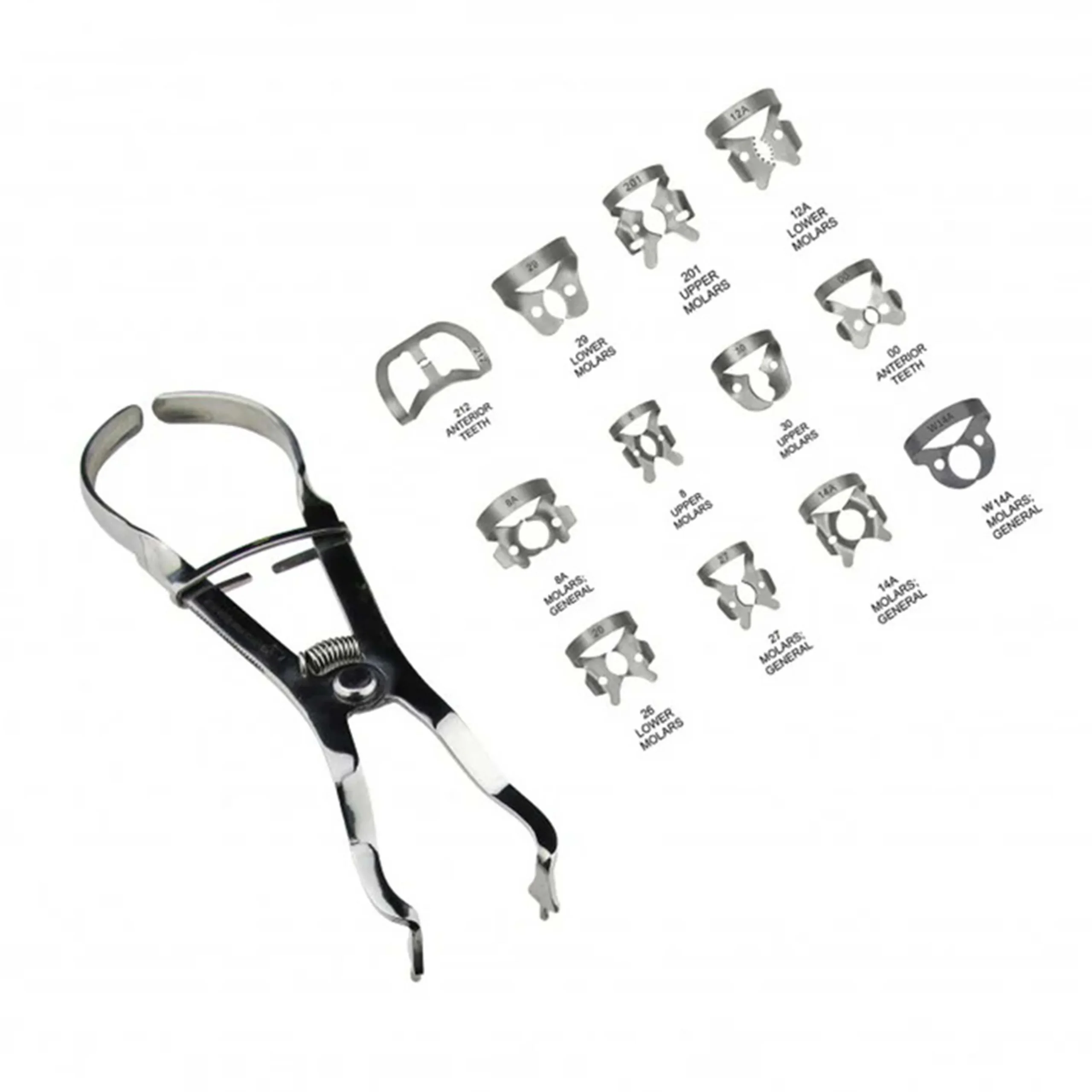
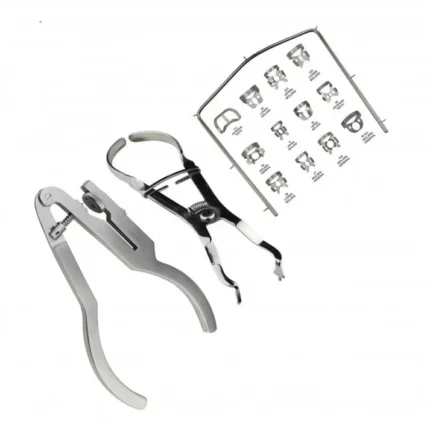
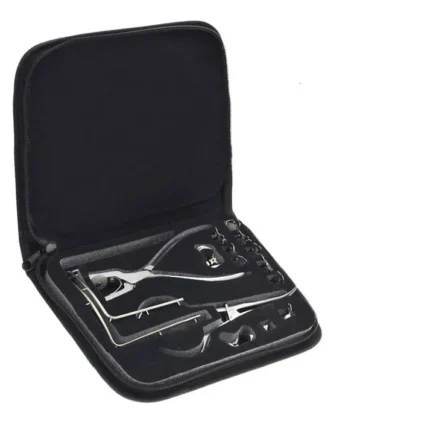

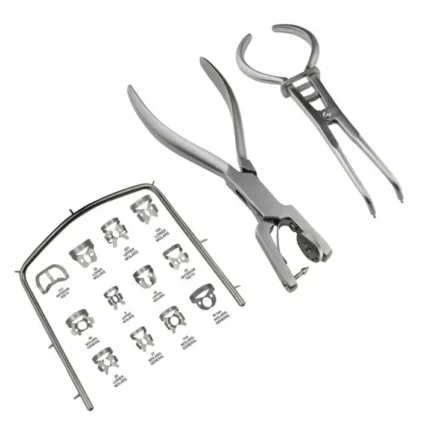
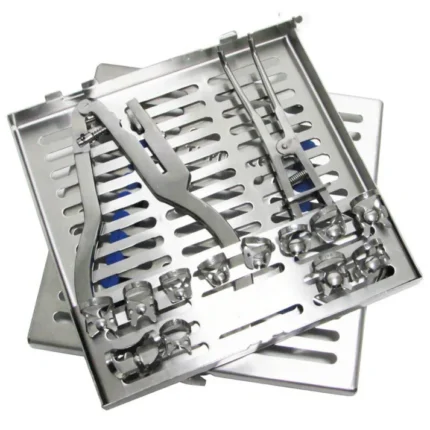
Rubber Dam Kit 13pcs, is a reusable dental isolation instrument set made from German stainless steel for endodontic rubber dam placement, restorative dentistry, adhesive bonding, crown preparation, fissure sealants, and operative moisture control. The 13-piece set consists of rubber dam forceps 17 cm and rubber dam 12 clamps, giving clinicians the core instruments for retainer selection, clamp opening, tooth retention, dam stabilization, and controlled removal after treatment. The 17 cm forceps engage clamp holes for placement around molars, premolars, anterior teeth, and partially erupted clinical crowns. The 12 clamps provide cervical retention during root canal therapy, class I and class II composite restorations, inlay preparation, onlay seating, veneer procedures, crown-margin review, and adhesive cementation. Endodontists, restorative dentists, prosthodontists, pediatric dentists, general dentists, dental schools, hospital dental departments, veterinary dental services, distributors, and procurement teams use this kit in reusable isolation trays where clamp retention, dry field control, and organized chairside setup are required.
Clamp Forceps and Retainer Working Mechanism
The Rubber Dam Kit 13pcs works through coordinated clamp expansion, tooth engagement, dam retention, and controlled removal. The 17 cm forceps use narrow beaks that enter the holes of a selected rubber dam clamp, allowing the clinician to open the retainer under controlled hand pressure. Once expanded, the clamp is guided over the target tooth and released around the cervical contour, where the spring action of the clamp maintains retention. The length of the forceps keeps the operator’s fingers away from the occlusal field while working around posterior molars, premolars, and restricted intraoral spaces. The 12 clamps provide different retentive profiles for posterior and anterior tooth forms, allowing the clinician to match the retainer to crown height, cervical contour, eruption level, and planned isolation span. The clamps stabilize the dam sheet while retracting soft tissue and improving field separation. There is no cutting, ratchet, or tissue-grasping action in the system. Clinical control depends on forceps beak engagement, clamp spring retention, cervical seating, and steady release.
Endodontic and Restorative Rubber Dam Workflow
During root canal therapy, the Rubber Dam Kit 13pcs is used after diagnosis, anesthesia, radiographic review, and clamp selection to establish isolation before access preparation, canal negotiation, irrigation, obturation, and temporary restoration. The clinician selects a clamp according to tooth group, crown contour, gingival clearance, and retention requirement, then uses the 17 cm forceps to expand and position the retainer over the tooth. In restorative dentistry, the set supports class I and class II composite placement, fissure sealants, adhesive bonding, inlay preparation, onlay seating, veneer work, crown-margin review, and cement cleanup. The clamp holds the dam sheet securely while saliva, tongue, cheeks, and adjacent soft tissues remain separated from the bonding field. Prosthodontic teams use the clamp-and-dam sequence during adhesive cementation where margin control is central to the procedure. Pediatric dentists select retainers according to eruption level and available crown height. Veterinary dental clinicians apply the same retention principle in selected oral procedures requiring tooth isolation and organized clamp handling.
Twelve Clamps and 17 cm Forceps Selection
The 12-clamp arrangement is selected when a clinic needs broad retainer coverage without purchasing a larger rubber dam instrument set. Molar clamps support posterior root canal access, class II restorations, crown preparation, inlay procedures, onlay seating, and adhesive cementation where cervical retention is required. Premolar retainers are used for smaller posterior crowns and quadrant isolation where a broader molar clamp could interfere with gingival tissue or operative visibility. Anterior clamps support class V restorations, veneer preparation, cervical margin access, and single-tooth isolation where labial and lingual adaptation must be controlled. The 17 cm forceps are selected whenever the clamp must be opened, transferred, seated, adjusted, or removed without direct hand contact near the retainer jaws. This length is especially useful around maxillary molars, mandibular second molars, partially erupted posterior teeth, and veterinary posterior fields. The component selection is driven by target anatomy, treatment type, crown contour, dam tension, and operator access rather than a size scale or gauge sequence.
German Steel Reprocessing and Procurement Records
German stainless steel construction gives the Rubber Dam Kit 13pcs the rigidity required for repeated clamp handling, forceps opening, spring retention, and sterilization turnover in clinical departments. The polished stainless finish supports visual inspection after cleaning, while the reusable design fits standard dental reprocessing workflows used by clinics, hospitals, schools, and distributors. After treatment, staff remove debris from clamp wings, bow areas, forceps beaks, and contact surfaces before cleaning, rinsing, drying, inspecting clamp count and spring action, packaging, and steam autoclaving according to facility protocol. The 12-clamp inventory supports department-level isolation planning, while the included 17 cm forceps keep clamp placement and removal standardized across operatories. CE marking supports international medical device procurement, and ISO 13485 certification reflects manufacturing controls used in regulated dental instrument supply. FDA-compliant procurement support helps United States buyers maintain reusable instrument records. The set supports one-kit ordering, multi-chair replenishment, custom rubber dam kit assembly, OEM supply, return assistance, tracking support, and documentation for professional purchasing teams.

Reviews
There are no reviews yet.