
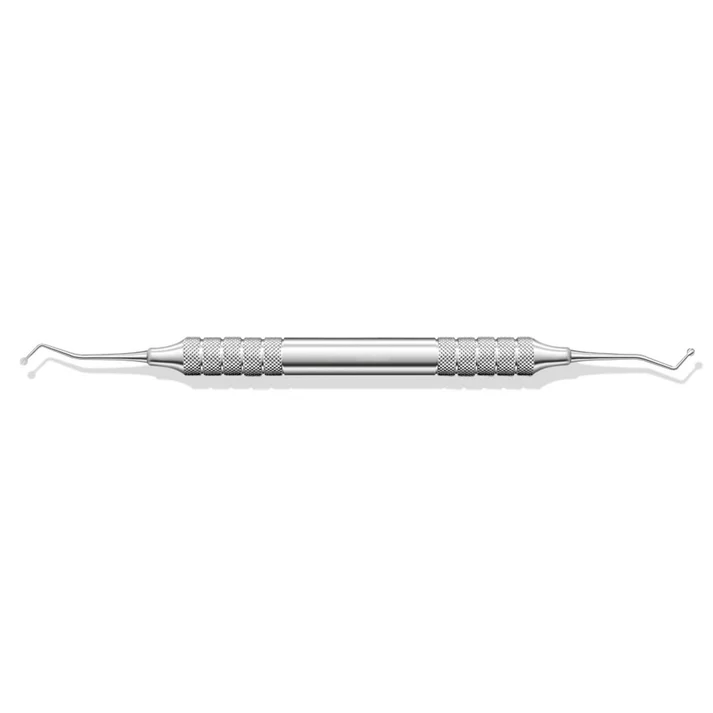
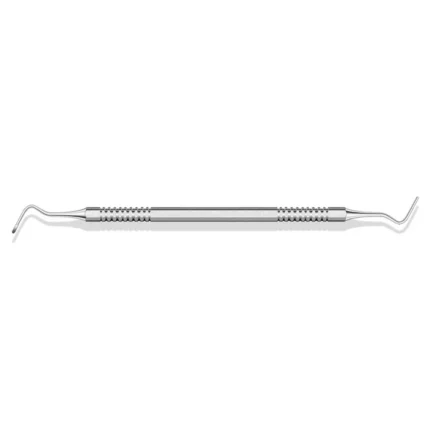
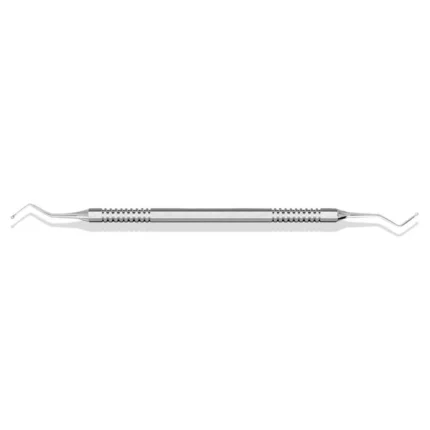

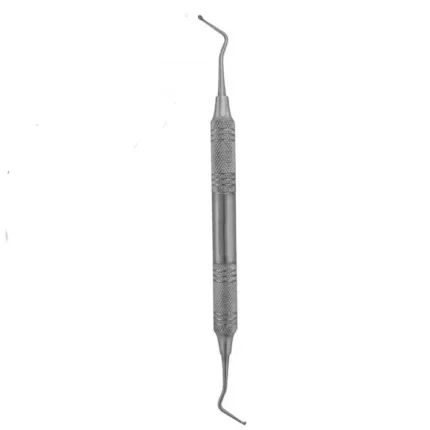
Orthodontic Excavator Stainless Steel, is a reusable dental excavator made from German stainless steel for caries excavation, softened dentin removal, orthodontic adhesive cleanout, band cement review, cavity floor refinement, temporary restorative material removal, endodontic access cleanout, and operative restorative preparation. The working sizes are 1mm and 4mm, giving clinicians two spoon-tip selections for narrow bracket-adjacent remnants, conservative cervical access, broader resin removal, expanded cavity cleanout, and larger restorative fields. The angled shanks position the spoon ends into occlusal pits, proximal boxes, cervical lesions, class I cavities, class II preparations, class V defects, access cavities, orthodontic band margins, crown-margin areas, and veterinary dental restorations. The spoon-shaped working tips are used after visual inspection, isolation, caries detection, bracket debonding review, appliance removal, or rotary access when softened dentin, residual resin, temporary cement, or unsupported restorative material must be removed manually. General dentists, restorative clinicians, orthodontists, endodontists, pediatric dentists, dental schools, hospital dental units, veterinary dental teams, distributors, and procurement offices use this Class I reusable hand instrument in operative, orthodontic, endodontic, teaching, and restorative tray setups.
Angled Spoon Geometry and Manual Cleanout Control
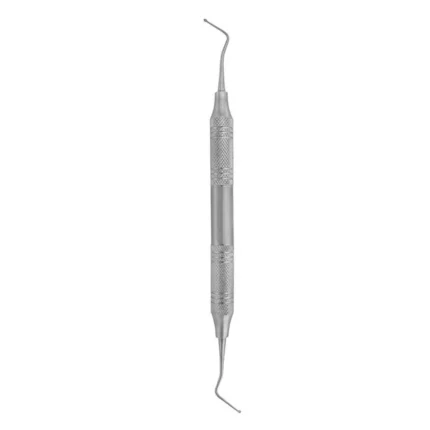
Orthodontic Excavator Stainless Steel uses two angled spoon-shaped working ends joined to a textured reusable handle for controlled manual excavation and chairside material removal. Each spoon has a concave cutting edge that engages softened dentin, residual adhesive, temporary material, debris, or cement through scraping and scooping strokes. The 1mm end provides narrow contact for conservative cavity access, pediatric restorations, cervical caries, endodontic chamber refinement, and fine adhesive remnants near bracket bases or band margins. The 4mm end provides a broad working surface for expanded cavity cleanout, wider occlusal lesions, class II box floor refinement, crown-margin debris removal, and larger resin or cement residue fields. The contra-angled shanks keep the clinician’s fingers outside the mirror line while the terminal spoon reaches posterior, proximal, cervical, orthodontic, or access-cavity areas. The knurled handle supports wet-glove rotation and light pressure modulation at the cutting edge. There is no ratchet, spring, lock, pivot, or box joint because function depends on manual pressure, spoon-edge contact, shank angulation, and tactile feedback from the prepared surface.
Restorative, Orthodontic, and Endodontic Workflow
During operative dentistry, Orthodontic Excavator Stainless Steel is introduced after diagnosis, isolation, caries detection, visual inspection, and initial access preparation. The selected spoon tip removes softened dentin from occlusal fissures, proximal boxes, cervical lesions, undermined restorative margins, and cavity floors while maintaining controlled contact with axial walls and line angles. In class I and class II preparations, the instrument supports hand cleanout near the dentinoenamel junction, pulpal floor, gingival seat, and proximal box margins where tactile discrimination guides material removal. In orthodontic workflows, the spoon profile is used during bracket debonding review, band cement cleanout, adhesive flash removal, and appliance-adjacent restorative inspection when controlled manual contact is required. During endodontic access, the excavator removes temporary filling material, chamber debris, soft dentin remnants, and residual restorative fragments before irrigation, canal location, or provisional closure. Pediatric dentists use the 1mm size where tooth dimensions and access width are restricted, while the 4mm end is selected when broader cleanup is required. Veterinary dental teams use the same hand excavation sequence in canine and feline restorations where visibility and rotary access are limited.
1mm and 4mm Working-End Selection
The 1mm size is selected for narrow occlusal pits, fine cervical access, pediatric primary teeth, small proximal boxes, early carious defects, bracket-adjacent remnants, and restricted endodontic chamber refinement. Its narrow spoon profile allows precise entry into confined areas without enlarging the operative outline beyond the planned preparation. The 4mm size is selected for broad resin flash removal, larger adhesive remnants, wider cavity floors, temporary material removal, orthodontic band cement cleanout, and expanded crown-margin debris retrieval after rotary access. Its larger working surface reduces repeated strokes when softened dentin, composite residue, or cement occupies a wider field. Selection is based on tooth group, cavity width, appliance position, access route, dentin consistency, and treatment stage. The angled shanks support access around molars, premolars, anterior cervical lesions, endodontic access openings, fixed orthodontic components, and posterior veterinary teeth. This two-size range gives orthodontic, restorative, endodontic, pediatric, teaching, and multi-chair clinic trays a compact manual cleanout instrument for narrow and broad operative sites.
German Stainless Steel, Finish, Sterilization, and Records
German stainless steel construction gives Orthodontic Excavator Stainless Steel the rigidity required for controlled hand excavation while maintaining spoon-edge geometry through repeated clinical use. The listed finish options include satin, dull, and mirror surfaces, supporting operatory visibility, cleaning inspection, and department preference. The one-piece reusable metal body fits standard dental instrument reprocessing workflows in clinics, hospitals, schools, and distributor supply programs. After treatment, staff remove visible debris from both spoon ends, clean the concave working surfaces and shanks, rinse, dry, inspect edge integrity and handle texture, package, and steam autoclave according to facility protocol. CE marking supports international purchasing records, ISO 13485 certification reflects regulated medical device manufacturing controls, and FDA-compliant procurement support helps United States buyers maintain reusable hand instrument files. The product supports single-piece ordering, OEM supply, custom restorative or orthodontic set assembly, return and replacement service, one-year warranty management, and routine replenishment for dental clinics, hospital departments, teaching programs, veterinary units, and institutional procurement teams.

Reviews
There are no reviews yet.