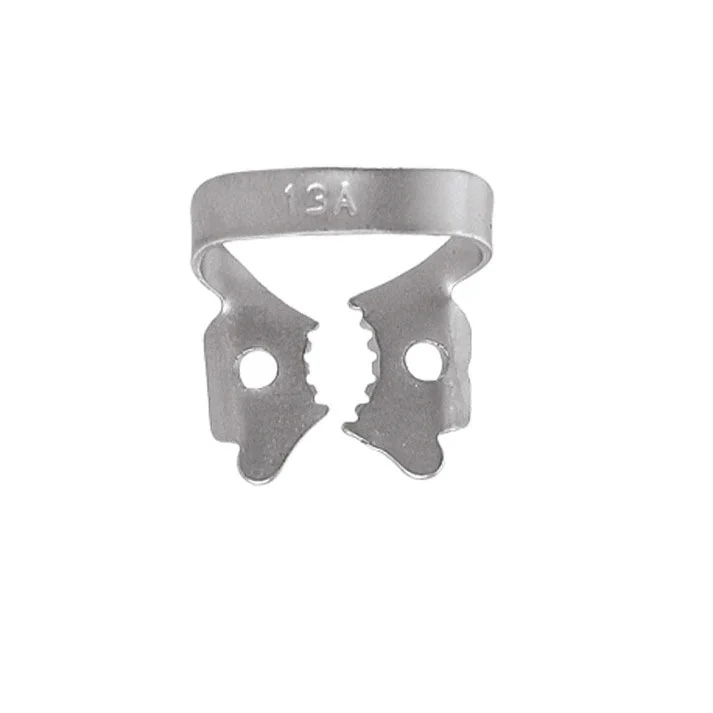
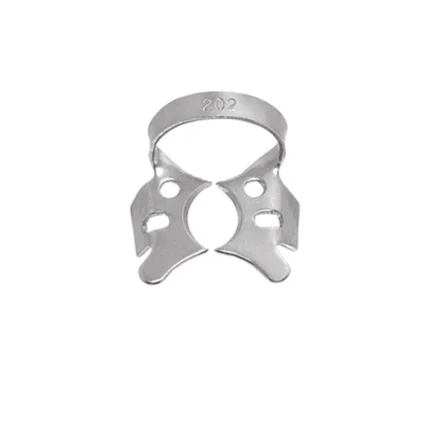
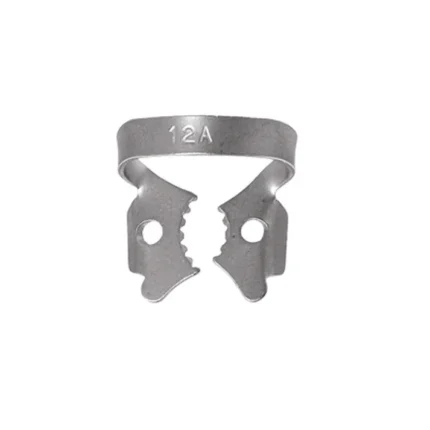

Molar Clamp Rubber Dam, SKU PS-D-106, is a reusable endodontic rubber dam clamp made from German stainless steel for posterior tooth isolation, root canal therapy, restorative dentistry, adhesive procedures, crown-margin control, and operative moisture management. The product is supplied as one rubber dam clamp and the visible marking identifies a 13A molar pattern with a curved bow, serrated retentive jaws, winged extensions, forceps holes, and cervical gripping contours for seating around posterior crowns. The clamp is used during molar endodontic access, pulp chamber isolation, class I restorations, class II cavity preparation, composite placement, amalgam replacement, coronal buildup, crown preparation isolation, pediatric posterior procedures where crown size permits, and veterinary dental restorations. The winged structure supports preloading with a rubber dam sheet before placement, while the serrated jaws stabilize the clamp at the cervical contour during irrigation, suction, handpiece use, matrix placement, bonding, and restorative finishing. Endodontists, general dentists, restorative clinicians, pediatric dentists, dental schools, hospital dental departments, veterinary dental teams, distributors, and procurement offices use this Class I reusable isolation instrument in posterior rubber dam kits and operative dental trays.
13A Bow, Wing, and Serrated Jaw Mechanics
The Molar Clamp Rubber Dam uses a spring stainless steel bow to separate the jaws during forceps loading and to maintain retentive pressure after the clamp is seated. The bow remains outside the operative crown surface, leaving the central field accessible for rotary preparation, pulp chamber entry, restoration placement, and coronal sealing. The 13A jaw profile is shaped for posterior retention, with serrated internal edges that engage the cervical contour of molar teeth and resist dislodgement during irrigation, suction, and restorative manipulation. The winged extensions hold the rubber dam sheet while the operator carries the clamp and dam together to the tooth. This is useful when the clinician wants the sheet positioned with the clamp before inversion around the crown. The circular forceps holes accept rubber dam forceps beaks for opening, transfer, seating, stability testing, and removal. The clamp has no ratchet, screw joint, box lock, or pivot; its working mechanism depends on spring tension, serrated jaw contact, winged dam support, bow resilience, and forceps-controlled placement.
Posterior Isolation During Endodontic and Restorative Procedures
During endodontic treatment, the Molar Clamp Rubber Dam is selected after clinical crown assessment, dam hole punching, floss ligature preparation, and forceps loading. The clinician opens the 13A clamp with rubber dam forceps, seats the jaws at the cervical contour, verifies four-point stability, and then inverts the dam around the posterior tooth before access preparation. In molar root canal therapy, the clamp retains the isolation field during chamber entry, canal location, irrigation, instrumentation, obturation, and temporary or definitive coronal sealing. In restorative workflows, the same clamp supports class I occlusal restorations, class II proximal preparations, adhesive composite placement, matrix adaptation, liner placement, base placement, amalgam replacement, and crown-margin refinement. The winged format is useful when the dam sheet is carried with the clamp and then inverted after placement. Pediatric use is selected when eruption level and crown size provide stable engagement. Veterinary dental teams use comparable posterior isolation logic for canine and feline restorative or endodontic procedures where moisture control and stable molar access are required.
13A Pattern Selection and Component Function
The 13A pattern is selected for posterior molar isolation when the operator needs a winged clamp with serrated retentive jaws and a compact bow that preserves crown access. The bow provides elastic memory and maintains clamp tension during the full procedure. The serrated jaws contact the buccal and lingual cervical regions and help resist displacement during handpiece vibration, canal irrigation, suction movement, and matrix placement. The wings support rubber dam preloading, allowing the sheet to be stretched onto the clamp before the assembly is carried to the molar. The forceps holes provide controlled engagement with clamp forceps, reducing uncontrolled finger pressure near the jaw edges. The central opening leaves the occlusal surface, access cavity, proximal box, and restorative field available for instrumentation. Selection is based on posterior crown morphology, eruption level, cervical contour, restorative margin position, adjacent tooth contact, dam hole spacing, and planned procedure. This clamp is not selected for extraction, tissue traction, orthodontic force application, or matrix retention without rubber dam isolation.
German Stainless Steel, Sterilization, and Procurement Records
German stainless steel construction gives the Molar Clamp Rubber Dam the spring resilience required for repeated posterior isolation while maintaining bow tension, serrated jaw alignment, wing form, and forceps-hole integrity through clinical turnover. The smooth stainless finish supports visual inspection after cleaning, including the bow curve, jaw serrations, wing surfaces, and lateral holes where debris can collect after endodontic or restorative procedures. After use, staff remove visible rubber dam fragments, cement, composite residue, blood, saliva, and irrigant deposits, clean the clamp surfaces, rinse, dry, inspect retentive edges and spring tension, package, and steam autoclave according to facility protocol. CE marking supports international medical device procurement, ISO 13485 certification reflects regulated manufacturing controls, and FDA-compliant procurement support helps United States buyers maintain reusable dental hand instrument records. The product supports single-piece ordering, replacement planning, rubber dam kit assembly, OEM supply, return support, order tracking, and documentation for clinics, hospitals, dental schools, distributors, emergency dental units, and veterinary dental departments.

Reviews
There are no reviews yet.