
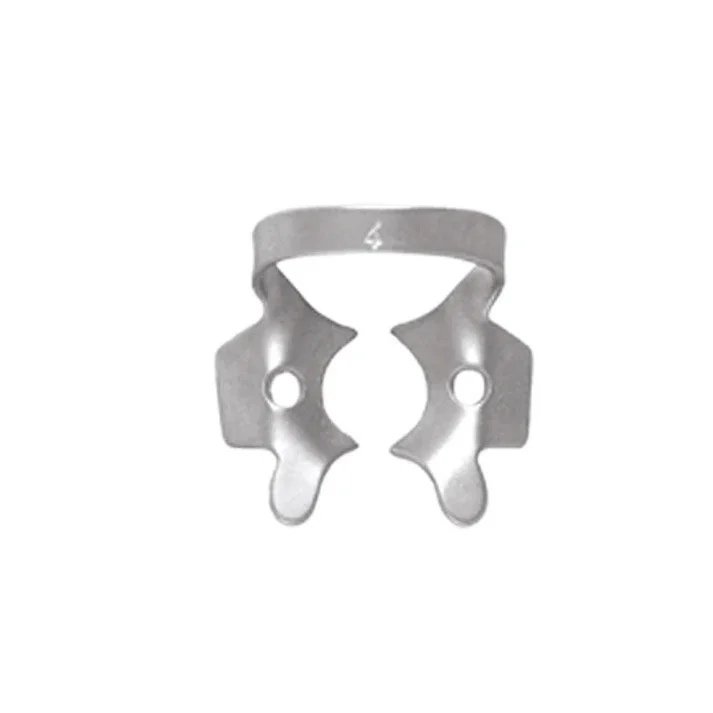
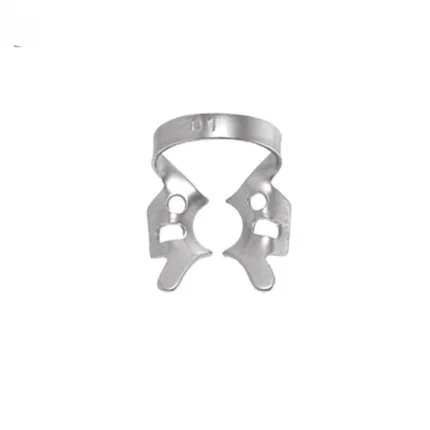
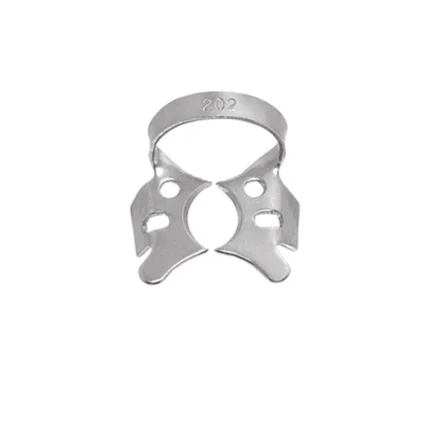

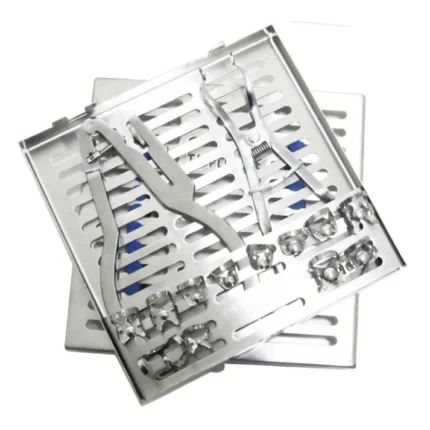
The Lower Molar Clamp from Peak Surgicals is a reusable stainless steel rubber dam clamp designed specifically for the cervical anatomy of mandibular molar teeth, providing stable four-point cervical engagement and rubber dam retention during root canal treatment and restorative procedures on lower first and second molars. Sold as a single piece, this clamp is used by general dentists and endodontists in dental practices, dental schools, and hospital dental departments worldwide.
Mandibular Molar Anatomy and the Case for an Arch-Specific Clamp
Lower molars differ from upper molars in several anatomical respects that influence rubber dam clamp selection and seating. The mandibular molar cervical contour is typically more pronounced lingually, with a narrower lingual surface relative to the buccal, compared to upper molars which tend to have more uniform bucco-lingual cervical profiles. Access to the lower molar region is also partially restricted by the tongue and floor of the mouth, meaning the clamp forceps approach angle during placement differs from upper molar placement. A clamp jaw profile calibrated to the mandibular molar cervical anatomy provides more reliable four-point contact than an upper molar or general molar clamp whose jaw geometry may not match the lingual cervical profile of a lower molar, leading to lingual jaw tip instability and potential clamp rocking during the procedure.
Lower Molar Root Canal Treatment Under Rubber Dam Isolation
Lower first and second molars are among the most commonly endodontically treated teeth in general practice. The mandibular first molar typically has two roots — mesial and distal — with two canals in the mesial root and one or two in the distal root, for a total of three or four canals requiring separate instrumentation, irrigation, and obturation under continuous rubber dam isolation. The lower second molar follows a similar pattern. Root canal treatment of these teeth requires prolonged rubber dam isolation — often 60–90 minutes for a single-visit case — making clamp stability throughout the entire appointment clinically essential. The Lower Molar Clamp from Peak Surgicals is sized and profiled for mandibular molar crown anatomy, providing the stable cervical engagement required to maintain rubber dam seal continuously from initial access preparation through to final coronal seal placement.
Four-Point Cervical Contact Sized for Lower Molar Crown Dimensions
The Lower Molar Clamp engages the mandibular molar tooth at four contact points — buccal, lingual, and interproximal — with jaw dimensions proportioned to the cervical width of lower molar teeth. The clamp bow spans the occlusal surface while the four jaw tips seat at the cervical margin, with the spring tension of the clamp maintaining consistent contact under the forces generated during access preparation, rotary instrumentation, and irrigation. Accurate jaw-to-tooth fit at the cervical margin is the primary determinant of clamp stability — a clamp that fits the lower molar cervical profile correctly seats without rocking and maintains its seal for the full duration of the endodontic appointment.
Stainless Steel Construction for Repeated Clinical Use
Each Lower Molar Clamp is manufactured from stainless steel, providing the structural rigidity and spring tension required to maintain consistent cervical contact at mandibular molar teeth across repeated clinical use and sterilization cycles. The clamp maintains its jaw geometry and bow profile without fatigue deformation, ensuring reliable isolation performance throughout its service life. Stainless steel construction ensures the clamp is rust-free and compatible with standard decontamination and sterilization protocols used in licensed dental facilities.
CE Mark, ISO 13485, and FDA Certification for Dental Instrument Procurement
The Lower Molar Clamp is manufactured under CE Mark, ISO 13485, and FDA compliant quality standards. ISO 13485 certification confirms Peak Surgicals operates a documented quality management system covering design control, material traceability, and production consistency for dental instruments. CE Mark confirms conformity with European medical device regulations, and FDA compliance supports procurement for US-based dental practices, dental schools, and hospital dental departments requiring verified regulatory documentation.

Reviews
There are no reviews yet.